How this started
Las Vegas Reptile Zoo was founded by Joseph Patinio, who serves as CEO, and is governed by a board of directors. The organization was recognized by the IRS as a 501(c)(3) charity under EIN 33-2811809, which you are welcome to look up.
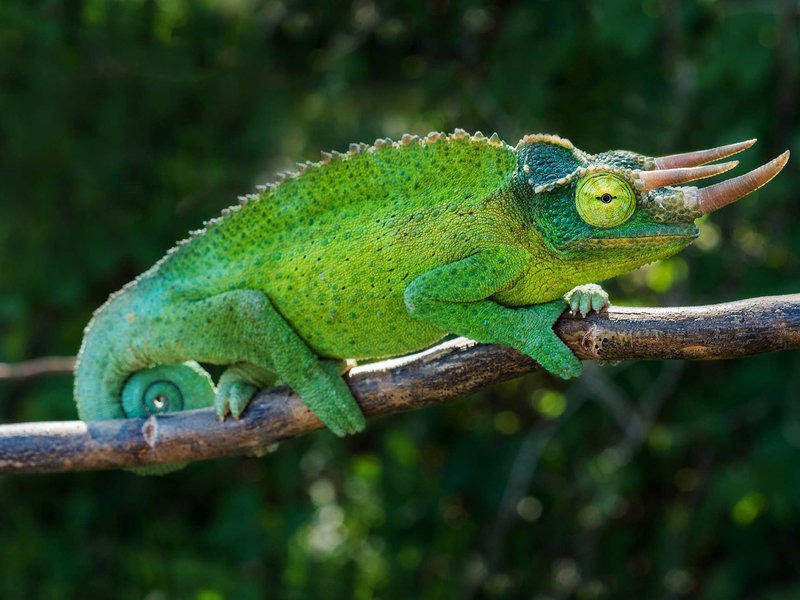
He grew up in Hawaii, where most reptiles and amphibians are prohibited from private ownership, so the animals he wanted to know were the ones he could not have. What he had instead was National Geographic, library books, and parents who let him keep the species that were legal: frogs, newts, turtles and tortoises. He spent his childhood watching and releasing wild green anoles, and hunting Jackson’s chameleons with his father.
At ten he started writing to the Hawaii Department of Agriculture, asking permission to import reptile species. The requests were refused, which was the correct answer and not the point. His grandfather noticed how serious he was and gave him a copy of The Encyclopedia of Reptiles and Amphibians. He still owns it.
He joined the Army at seventeen in 1998 and the Marine Corps in 2002. Stationed at Camp Pendleton in California, he could finally keep and work with the animals he had spent his childhood only reading about. That was when the interest turned technical: genetic morphs, the mechanisms behind color and pattern, selective breeding, and captive propagation as a discipline rather than a hobby.
After the service he returned to Hawaii for a few years, then moved to Las Vegas and founded Sin City Exotics. There he bred a long list of reptile and amphibian species, including rare, endangered and critically endangered ones.
Then the priorities moved. Breeding and genetic diversity stopped being the end of the work and became a means to it, and what he wanted to do with decades of accumulated knowledge was help people understand why any of these animals matter. This zoo is that change of mind, built into a building.
This is more than a zoo. It is a commitment to conservation, education, and the future of wildlife.
Hawaii ended up with a permanent wild population of Jackson’s chameleons because pet keepers released them, inside living memory. He was one of the children hunting them in those hills, which is roughly how a person ends up spending thirty years on the other side of that problem.