Found a reptile?
Most reptiles people find in the Las Vegas valley are exactly where they are supposed to be, and the best thing you can do is walk away. A few are somebody's escaped pet. One of them is protected by federal law, and picking it up can hurt it badly even when you are trying to help.
Work out which one you are looking at before you do anything.
Start here
Three situations, and they are not the same
A wild animal, outdoors, behaving normally
A tortoise walking across open desert, a snake in a wash, a lizard on a rock. This animal is not lost and does not need you. Watch it, enjoy it, and leave it where it is.
An animal that is clearly somebody's pet
A ball python in a garage, an iguana in a back yard, a tortoise in a fenced neighborhood. Non-native species do not survive here on their own, so this one needs help.
An injured animal, or one in immediate danger
Hit by a car, caught in netting, or in the middle of a busy road. This is the only case where handling a wild animal is the right call, and there are still rules about how.
Animals with laws attached
The Mojave desert tortoise
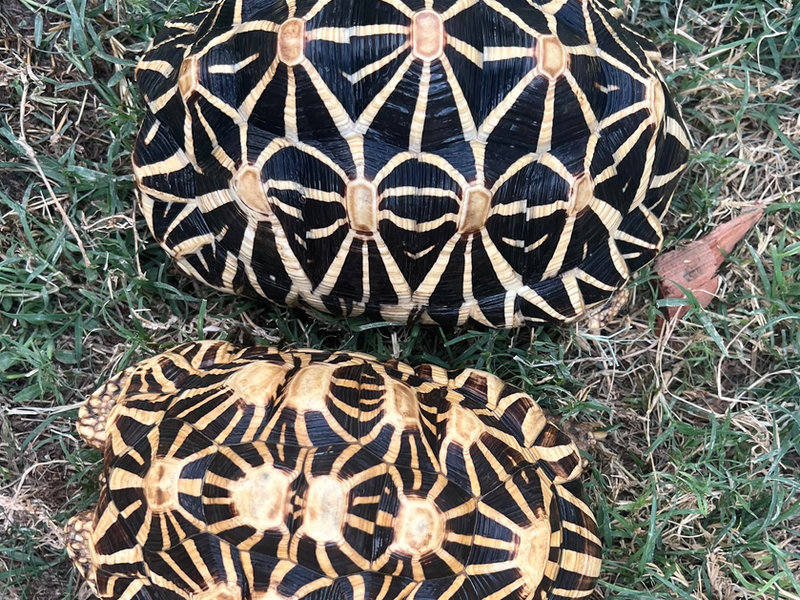
If you find a tortoise in southern Nevada, this is the section that matters. The Mojave desert tortoise is listed as threatened and is protected under the federal Endangered Species Act and under Nevada Administrative Code. Without a permit, nobody is allowed to take, harm, harass or collect one, and that includes moving it off your property because it is inconvenient.
Picking one up can kill it
A frightened desert tortoise empties its bladder. In an animal that stores water to survive a Mojave summer, that is not a mess, it is a serious loss it may not be able to replace before the next rain. This is the single most common way a well-meaning person harms a tortoise.
If it is in the open desert
Leave it alone. Take a photo from where you are standing, keep dogs away, and let it carry on. It is not lost, it is not abandoned, and it knows where its burrow is.
If it is on a road
If traffic allows, let it cross by itself. If it does not, carry it low to the ground, keep it level, and put it down off the road on the side it was already heading for, ideally in shade under a shrub. Never turn it around and never take it with you.
If it is in a yard or on a job site
Do not relocate it yourself. A tortoise moved out of its home range will try to walk back and can die doing it, and moving one without authorization is against the law. Contact the agencies below and let them make the call.
If it is a pet tortoise
Captive desert tortoises held before August 1990 and their offspring can legally be kept as pets in Nevada, so a tortoise in a fenced yard is very likely somebody's. It still cannot be released into the desert. Pet tortoises carry disease that wild populations cannot absorb.
The Gila monster
Nevada's other reptile with a law attached, and the one most people never expect to meet. The Gila monster is a state-protected species, and it is illegal to handle one without authorization from the Nevada Department of Wildlife. That applies whether you intend to help it or not.
It is venomous, and it will not chase you
A Gila monster bite is painful and very rarely deadly, and it only bites defensively when it feels threatened. The mistake people make is reading its slow walk as harmless. It can turn its head quickly, so give it room rather than a closer photograph.
If you find one in the wild
Leave it alone. Watch it from a distance, keep dogs back, and let it carry on. NDOW asks people to report sightings, which is genuinely useful to them, so send a photo and a location to [email protected] if you can take one safely.
If it is in a yard or somewhere it should not be
Do not move it yourself. Contact NDOW and let them decide, using the contacts below. Handling one without their authorization is against the law, and the only exception is a genuine and immediate risk to someone's safety.
The people who are actually authorized to help
We are an education zoo, not a wildlife rescue and not a state agency. For a native Nevada animal, these are the people to call, and the contacts below are the ones published by the Nevada Department of Wildlife.
Tortoise Group
Nevada's tortoise adoption and assistance organization, and the contact NDOW directs southern Nevada residents to for lost, found and unwanted pet tortoises.
Nevada Department of Wildlife
The agency responsible for native species in Nevada. Their guidance on living with desert tortoises, including what to do when you find one, is published on their site.
Desert Conservation Program
Clark County runs the local desert tortoise program covering wild tortoises found on development sites and in neighborhoods across the valley.
Phone numbers and programs change. Check the linked pages before you rely on anything here, and if a number has moved we would like to know so we can correct it.
Escaped and released pets
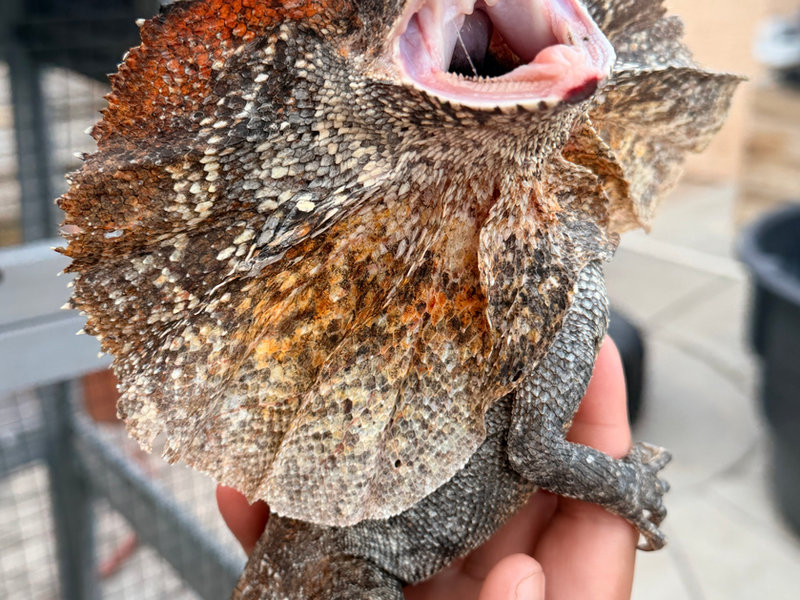
A ball python, a bearded dragon, an iguana or a leopard gecko loose in Las Vegas is a pet that got out. None of them are native to Nevada, none of them belong in the desert, and most of them will not last long outside.
Contain it safely
A tote with air holes and a towel is enough for most escaped pets. Keep it out of direct sun, keep children and dogs away, and do not try to identify a snake by handling it. If you are not certain what it is, photograph it from a distance and leave it contained.
Try to find the owner
Post in local neighborhood and reptile groups with a clear photo and the cross streets. Reptile keepers watch those groups closely, and most escapes are found within a few blocks of home.
Never release it
Releasing an unwanted reptile is how the western states ended up with permanent populations of animals that were never meant to be here. None of it was malice. It was people who could not keep an animal and thought the kind thing was to let it go. In the Mojave it is usually a death sentence for the animal, and occasionally a disease problem for the ones already living here.
We will take the conversation, every time
If you have found a pet reptile nobody claims, or you own one you can no longer care for, tell us about it. We cannot promise to take every animal, because space, quarantine and the right conditions decide that and pretending otherwise would be worse than saying no. What we can promise is a straight answer and, where we cannot help ourselves, a pointer to somebody who can.
Nothing about that conversation costs you anything, and we would far rather have it than watch an animal get released into the desert.